The Lloyd's Medal for Saving Life at Sea
The medal was bestowed on officers and crew of the merchant marine and fishing fleets by Lloyd's for saving life at sea in gold, silver and bronze and dates from 1836 to 1974. In 1974, the name was changed to the Lloyd's Medal for Saving Life. The medal was initially issued in a non-wearable 73mm. In 1896, it was reduced to 36mm and a suspension ribbon added for wear. The first gold medal ever awarded was to Captain Edward Evans of the H. M. S. Carlisle in 1921 for gallantry in conjunction with saving 200 lives from the sinking steamer Hong Moh in China. In 1974, the medal was renamed Lloyd's Medal for Saving Life. In June 2009, it was presented to Captain Chesley Sullenberger III of US Airways Flight 1549 in gold for saving 155 lives by skillfully crash landing his stricken aircraft safely in the Hudson River. He was only the second recipient of the gold medal in 173 years.
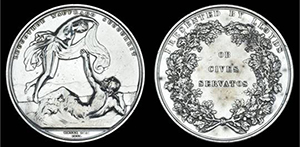
Lloyd's 73mm Silver Medal for Saving Life at Sea
The obverse depicts Leucothea (a Greek sea goddess) handing her scarf to Ulysses, who in clinging to a floating spar. The curved inscription in Latin around the upper edge reads, LEUCOTHOE NAUFRAGO SUCCURRIT (Leucothea offers comfort to the shipwrecked). Inscribed in the exergue is, W. WYON RA.1839. The reverse contains within sprays of oak tied at the base with ribbon the Latin inscription, OB CIVES SERVATO. Around the upper edge of the reverse is the curved inscription, PRESENTED BY LLOYD'S. In 1974, the medal's design was altered by removal of the Latin inscription on the obverse.
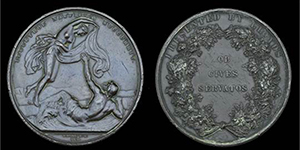
Lloyd's 73mm Bronze Medal for Saving Life at Sea
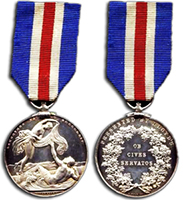
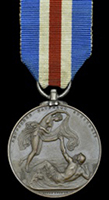
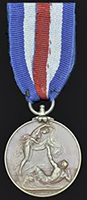
Lloyd's 36mm Wearable Medals for Saving Life at Sea in Silver and Bronze and 1974 Bronze Medal for Saving Life
The medal was bestowed on officers and crew of the merchant marine and fishing fleets by Lloyd's for saving life at sea in gold, silver and bronze and dates from 1836 to 1974. In 1974, the name was changed to the Lloyd's Medal for Saving Life. The medal was initially issued in a non-wearable 73mm. In 1896, it was reduced to 36mm and a suspension ribbon added for wear. The first gold medal ever awarded was to Captain Edward Evans of the H. M. S. Carlisle in 1921 for gallantry in conjunction with saving 200 lives from the sinking steamer Hong Moh in China. In 1974, the medal was renamed Lloyd's Medal for Saving Life. In June 2009, it was presented to Captain Chesley Sullenberger III of US Airways Flight 1549 in gold for saving 155 lives by skillfully crash landing his stricken aircraft safely in the Hudson River. He was only the second recipient of the gold medal in 173 years.
Lloyd's 73mm Silver Medal for Saving Life at Sea
The obverse depicts Leucothea (a Greek sea goddess) handing her scarf to Ulysses, who in clinging to a floating spar. The curved inscription in Latin around the upper edge reads, LEUCOTHOE NAUFRAGO SUCCURRIT (Leucothea offers comfort to the shipwrecked). Inscribed in the exergue is, W. WYON RA.1839. The reverse contains within sprays of oak tied at the base with ribbon the Latin inscription, OB CIVES SERVATO. Around the upper edge of the reverse is the curved inscription, PRESENTED BY LLOYD'S. In 1974, the medal's design was altered by removal of the Latin inscription on the obverse.
Lloyd's 73mm Bronze Medal for Saving Life at Sea
Lloyd's 36mm Wearable Medals for Saving Life at Sea in Silver and Bronze and 1974 Bronze Medal for Saving Life
Website Maintained by Vaudezilla