Nightingale
Florence Nightingale was an English social reformer, statistician and the founder of modern nursing. Her most famous work involved managing and training nurses during the Crimean War. Her care for the wounded at Selimiye Barracks in Scutari led to her becoming a highly-decorated Victorian icon.
When reports reached Britain about the abysmal conditions for wounded soldiers at the military hospital on the Asiatic side of the Bosporus at Scutari (now Uskudar, Turkey), she departed England along with her aunt Mai and 38 civilian volunteer nurses, referred to as the "handmaidens of the Lord" on October 21, 1854.
Nightingale arrived at Selimiye Barracks in Scutari early in November 1854. Her team found poor care for wounded soldiers was being delivered by overworked medical staff in the face of official indifference. Medicines were in short supply, hygiene was neglected and mass infections were common, many of them fatal. There was also no equipment to process food for patients.
During the Crimean War Scutari Barracks was converted into a British military hospital, known as Scutari Hospital. The inadequate building was not designed to cope with the thousands of sick and injured soldiers who were placed there for medical care.
After Nightingale sent a plea to The Times of London for a government solution to the pathetic condition of the facilities, the British Government commissioned Isambard Kingdom Brunel to design a prefabricated hospital that could be built in England and shipped to the Dardanelles for assembly. The result was Renkioi Hospital, a civilian facility, under the management of Dr. Edmund Alexander Parkes, which achieved a death rate less than 1/10th that of Scutari.
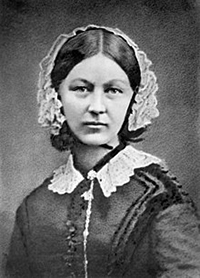
Florence Nightingale [May 12, 1820 - August 13, 1910]
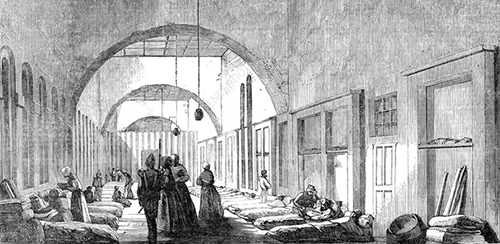
Scutari British Military Hospital
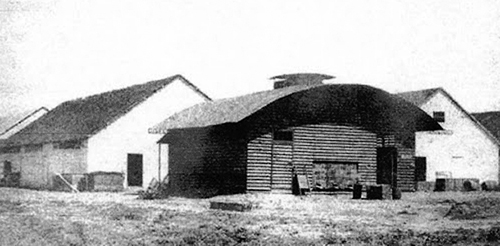
Renkioi Civilian Hospital
During Nightingale's first winter at Scutari, 4,077 soldiers died there. Ten times more soldiers died from illnesses such as typhus, typhoid, cholera, and dysentery than from battle wounds. With overcrowding, defective sewers and lack of ventilation, the Sanitary Commission had to be dispatched by the British government to Scutari in March 1855, almost six months after Nightingale had arrived. The Commission flushed out the sewers and improved ventilation. Eventually, death rates were sharply reduced.
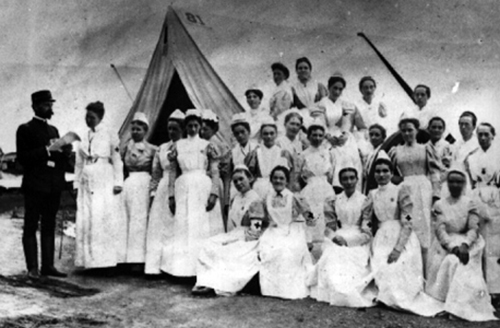
Nightingale and Some of the 38 Civilian Nurses
Renkioi was remembered as an astonishing early prefabricated structure, but the war was soon to end and it was never used to near capacity. Thus, its other successful features have largely been forgotten. Renkioi demonstrated the advantages of having a doctor, rather than a military officer, in command of a hospital, which was later acquiesced to by the army. Renkioi also showed how infection could be reduced by capable staff in a well administered, properly designed hospital with good sanitation. After the war, Dr. Edmund Parkes, its Medical Superintendent, became the first Professor of Hygiene at the new Army Medical School, ensuring that "the prevention of disease and the promotion of health" became the first function of the Army Medical Services.
Nightingale strongly believed that poor nutrition, lack of supplies, stale air, and overworking of the soldiers also contributed to death rates. After she returned to Britain and began collecting evidence for the Royal Commission on the Health of the Army, she came to believe that most of the soldiers at the hospital were killed by poor living conditions. This experience influenced her later career, when she advocated for sanitary living conditions. Consequently, she reduced peacetime deaths in the army and turned her attention to the sanitary design of hospitals and the introduction of sanitation in working-class homes.
Florence Nightingale was an English social reformer, statistician and the founder of modern nursing. Her most famous work involved managing and training nurses during the Crimean War. Her care for the wounded at Selimiye Barracks in Scutari led to her becoming a highly-decorated Victorian icon.
When reports reached Britain about the abysmal conditions for wounded soldiers at the military hospital on the Asiatic side of the Bosporus at Scutari (now Uskudar, Turkey), she departed England along with her aunt Mai and 38 civilian volunteer nurses, referred to as the "handmaidens of the Lord" on October 21, 1854.
Nightingale arrived at Selimiye Barracks in Scutari early in November 1854. Her team found poor care for wounded soldiers was being delivered by overworked medical staff in the face of official indifference. Medicines were in short supply, hygiene was neglected and mass infections were common, many of them fatal. There was also no equipment to process food for patients.
During the Crimean War Scutari Barracks was converted into a British military hospital, known as Scutari Hospital. The inadequate building was not designed to cope with the thousands of sick and injured soldiers who were placed there for medical care.
After Nightingale sent a plea to The Times of London for a government solution to the pathetic condition of the facilities, the British Government commissioned Isambard Kingdom Brunel to design a prefabricated hospital that could be built in England and shipped to the Dardanelles for assembly. The result was Renkioi Hospital, a civilian facility, under the management of Dr. Edmund Alexander Parkes, which achieved a death rate less than 1/10th that of Scutari.
Florence Nightingale [May 12, 1820 - August 13, 1910]
Scutari British Military Hospital
Renkioi Civilian Hospital
Nightingale and Some of the 38 Civilian Nurses
Nightingale strongly believed that poor nutrition, lack of supplies, stale air, and overworking of the soldiers also contributed to death rates. After she returned to Britain and began collecting evidence for the Royal Commission on the Health of the Army, she came to believe that most of the soldiers at the hospital were killed by poor living conditions. This experience influenced her later career, when she advocated for sanitary living conditions. Consequently, she reduced peacetime deaths in the army and turned her attention to the sanitary design of hospitals and the introduction of sanitation in working-class homes.
Website Maintained by Vaudezilla