George Cross and George Medal 1940 to Present
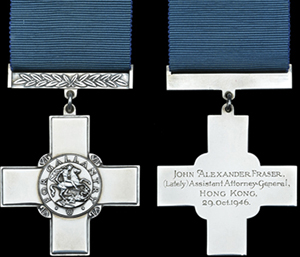
The George Cross
The Cross
The George Cross was instituted on September 24, 1940 by King George VI. At this time, during the height of the Blitz, there was a strong desire to reward the many acts of civilian courage. The existing awards open to civilians were not judged suitable to meet the new situation, therefore it was decided that the George Cross and the George Medal would be instituted to recognize both civilian gallantry in the face of enemy action and brave deeds more generally.
The George Cross (GC) is the second highest award of the United Kingdom honors system. It is awarded "for acts of the greatest heroism or for most conspicuous courage in circumstance of extreme danger" not in the presence of the enemy. It may be awarded to members of both the British armed forces and to British civilians. Posthumous awards have been allowed since it was instituted. It was previously awarded to residents of Commonwealth countries (and in one case to a Commonwealth country, Malta). It may be awarded to a person of any military rank in any service and to civilians including police, emergency services and merchant seamen. Many of the awards have been personally presented by the British monarch to both recipients and in the case of posthumous awards to next of kin. These investitures are usually held at Buckingham Palace.
The Cross is made of silver. The obverse depicts an image of St. George fighting the dragon surrounded by the inscription, FOR GALLANTRY. The reverse is engraved the name of the recipient and the date of the award. Each arm of the cross bears the cipher of the reigning Monarch, during the war GRI or GRVI and after the war EIIR. The cross hangs by a silver ring from a silver bar adorned with laurel leaves.
Only one civilian and seven military personnel have earned both the George Cross and the George Medal. Two collective awards of the George Cross were awarded to: (1) the Island of Malta and (2) The Northern Ireland Constabulary, now known as the Northern Ireland Police Service.
The Medal
The George Medal, instituted at the same time as the George Cross, is analogous to it but is awarded for services not quite so outstanding as those, which merit the George Cross. Recipients of this medal can add GM after their names. The medal is silver. One side has the effigy of the reigning British monarch, and the other side has St. George and the dragon with the curved inscription, THE GEORGE MEDAL.
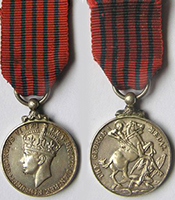
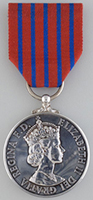
George VI & ERII Versions of the George Medal
Other Discontinued or generally Inactive Gallantry Medals, some replaced effectively by the Queen's Gallantry Medal:
Board of Trade Sea Gallantry Medal (see separate entry for Sea Gallantry Medal on this site) 1841-
Colonial Police Medal for Gallantry/Overseas Territories Police Medal 1938-
King's Police Medal 1909-1940
King's Police and Fire Service Medal 1940-1954
Queen's Police Medal for Distinguished Service 1954-
Queen's Police Medal for Gallantry 1954-
Queen's Fire Service Medal for Distinguished Service 1954-
Queen's Fire Service Medal for Gallantry 1954-
Note: Queen's Police Medal for Distinguished Service and Queen's Fire Service Medal for Distinguished Service are still occasionally awarded. In fact, there are also two relatively new additions to this series: (1) the Queen's Volunteer Reserve Medal instituted in 1999 and limited to 13 awards per year and (2) the Queen's Ambulance Service Medal, introduced in 2012, it recognizes distinguished service in the National Health Service.
The Queen's Volunteer Reserve Medal is circular and made of silver colored metal. The obverse bears the sovereign's effigy surrounded by the inscription ELIZABETH II DEI GRATIA REGINA FID DEF. The reverse depicts a scroll with the inscription The Queen's Volunteer Reserves Medal. Receipt of this medal entitles the holder to use the post-nominals QVRM. There are no clasps awarded for this medal.
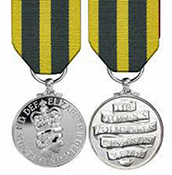
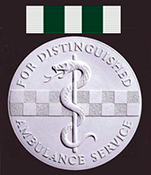
Queen's Volunteer Reserve Medal and Ribbon and Reverse Design of the Queen's Ambulance Service Medal
The Queen's Ambulance Service Medal is silver, with the obverse featuring the crowned effigy of Queen Elizabeth II. The medal's reverse is design emblematic of the Ambulance Service. It depicts a rod of Asclepius superimposed over a horizontal checkered band (sometimes referred to as or Battenburg markings) in the center. Above is the rod is the inscription FOR DISTINGUISHED and below is AMBULANCE SERVICE.
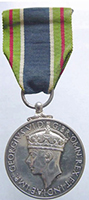
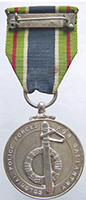
Colonial Police Medal for Gallantry and King's Police and Fire Services Gallantry Medal
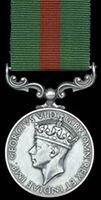
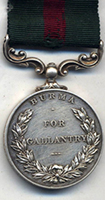
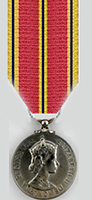
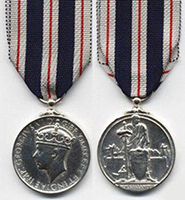
Burma Gallantry Medal 1940-48 & Queen's Fire Service Medal for Gallantry
The George Cross
The Cross
The George Cross was instituted on September 24, 1940 by King George VI. At this time, during the height of the Blitz, there was a strong desire to reward the many acts of civilian courage. The existing awards open to civilians were not judged suitable to meet the new situation, therefore it was decided that the George Cross and the George Medal would be instituted to recognize both civilian gallantry in the face of enemy action and brave deeds more generally.
The George Cross (GC) is the second highest award of the United Kingdom honors system. It is awarded "for acts of the greatest heroism or for most conspicuous courage in circumstance of extreme danger" not in the presence of the enemy. It may be awarded to members of both the British armed forces and to British civilians. Posthumous awards have been allowed since it was instituted. It was previously awarded to residents of Commonwealth countries (and in one case to a Commonwealth country, Malta). It may be awarded to a person of any military rank in any service and to civilians including police, emergency services and merchant seamen. Many of the awards have been personally presented by the British monarch to both recipients and in the case of posthumous awards to next of kin. These investitures are usually held at Buckingham Palace.
The Cross is made of silver. The obverse depicts an image of St. George fighting the dragon surrounded by the inscription, FOR GALLANTRY. The reverse is engraved the name of the recipient and the date of the award. Each arm of the cross bears the cipher of the reigning Monarch, during the war GRI or GRVI and after the war EIIR. The cross hangs by a silver ring from a silver bar adorned with laurel leaves.
Only one civilian and seven military personnel have earned both the George Cross and the George Medal. Two collective awards of the George Cross were awarded to: (1) the Island of Malta and (2) The Northern Ireland Constabulary, now known as the Northern Ireland Police Service.
The Medal
The George Medal, instituted at the same time as the George Cross, is analogous to it but is awarded for services not quite so outstanding as those, which merit the George Cross. Recipients of this medal can add GM after their names. The medal is silver. One side has the effigy of the reigning British monarch, and the other side has St. George and the dragon with the curved inscription, THE GEORGE MEDAL.
George VI & ERII Versions of the George Medal
Other Discontinued or generally Inactive Gallantry Medals, some replaced effectively by the Queen's Gallantry Medal:
Board of Trade Sea Gallantry Medal (see separate entry for Sea Gallantry Medal on this site) 1841-
Colonial Police Medal for Gallantry/Overseas Territories Police Medal 1938-
King's Police Medal 1909-1940
King's Police and Fire Service Medal 1940-1954
Queen's Police Medal for Distinguished Service 1954-
Queen's Police Medal for Gallantry 1954-
Queen's Fire Service Medal for Distinguished Service 1954-
Queen's Fire Service Medal for Gallantry 1954-
Note: Queen's Police Medal for Distinguished Service and Queen's Fire Service Medal for Distinguished Service are still occasionally awarded. In fact, there are also two relatively new additions to this series: (1) the Queen's Volunteer Reserve Medal instituted in 1999 and limited to 13 awards per year and (2) the Queen's Ambulance Service Medal, introduced in 2012, it recognizes distinguished service in the National Health Service.
The Queen's Volunteer Reserve Medal is circular and made of silver colored metal. The obverse bears the sovereign's effigy surrounded by the inscription ELIZABETH II DEI GRATIA REGINA FID DEF. The reverse depicts a scroll with the inscription The Queen's Volunteer Reserves Medal. Receipt of this medal entitles the holder to use the post-nominals QVRM. There are no clasps awarded for this medal.
Queen's Volunteer Reserve Medal and Ribbon and Reverse Design of the Queen's Ambulance Service Medal
The Queen's Ambulance Service Medal is silver, with the obverse featuring the crowned effigy of Queen Elizabeth II. The medal's reverse is design emblematic of the Ambulance Service. It depicts a rod of Asclepius superimposed over a horizontal checkered band (sometimes referred to as or Battenburg markings) in the center. Above is the rod is the inscription FOR DISTINGUISHED and below is AMBULANCE SERVICE.
Colonial Police Medal for Gallantry and King's Police and Fire Services Gallantry Medal
Burma Gallantry Medal 1940-48 & Queen's Fire Service Medal for Gallantry
Website Maintained by Vaudezilla