British Medals
Queen's South Africa Medal (QSA)
The 38mm, silver Queen's South Africa Medal was awarded to all British forces who served in South Africa from October 11, 1899 up to the end of the war on May 31, 1902. Units from the British Army, Royal Navy, Colonial Forces from Australia, Canada, New Zealand, India, the Cape of Good Hope, the Colony of Natal and "Hensoppers" (joiners and collaborators, literally hands-uppers or volunteers) from the South African Republic and Orange Free State, civilians employed in official capacity, war correspondents, and non-enlisted men of whatever nationality who drew military pay, qualified for the award of the medal. Approximately 178,000 were awarded. This included those such as the New Zealand 10th Contingent, who arrived in Durban in May 1902, but did not fight. Bronze versions were awarded to some Indian troops and non-enlisted men of whatever nationality, who drew military pay.
The obverse depicts a crowned and veiled effigy of Queen Victoria, facing left, with the inscription, VICTORIA REGINA ET IMPERATRIX around the upper portion. The reverse shows Britannia holding the Union Flag in her left hand and a laurel wreath in her right hand. In the right background are troops marching inland from the coast. In the left background are two men-of-war, with Neptune's Trident and Britannia's shield on the ground in the foreground. Around the upper portion is the inscription, words SOUTH AFRICA. Three versions of the medal's reverse are known to exist. Since the war was initially expected to be of short duration and to reach its conclusion in 1900, the first medals (Type 1) were struck with the years 1899 and 1900 in the right upper quadrant of the reverse and with Britannia's wreath pointing towards the R in AFRICA. Approximately fifty of the Type 1 medals were awarded to Lord Strathcona's Horse (Royal Canadians) before it became evident that the war was going to drag on much longer. The rest of the dated medals (Type 2), which had already been minted, had the dates machined off (some still visible) and are known as Ghost Medals. The Type 2 reverse is otherwise identical to Type 1. The third version (Type 3) was minted with new dies without the years and with Britannia's wreath now almost touching the F of AFRICA.
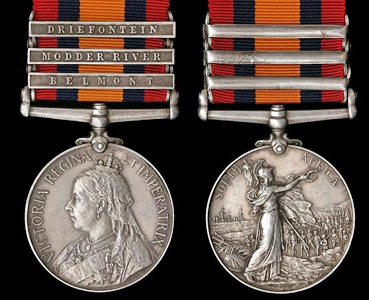
Queen's South Africa Medal Obverse & Reverse Type 3
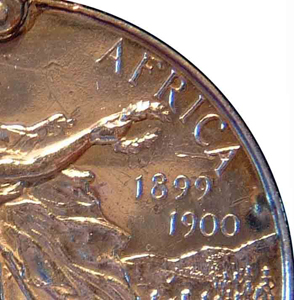
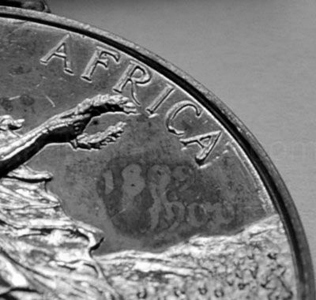
Bronze Type 1 Reverse with Dates and Wreath Near the R in AFRICA and Silver Type 2 Reverse with Visible Ghost Dates
Altogether, twenty-six clasps were awarded to recipients of the Queen's South Africa Medal, to indicate each action and campaign of the Second Boer War. They were authorized in Army Order 94, April 1902, as amended. The official order of wear of all 26 clasps is according to the starting dates of the applicable battle or campaign and, in the case of the four clasps with the same starting dates, also according to the duration of the campaign. As they would appear on a ribbon and read from the suspender upwards, their order of wear is as follows, with the clasps at the bottom of the list appearing closest to the suspender. They are shown with British spellings and their applicable starting dates in brackets.
Unoffical Clasps:
State Clasps:
A State clasp was awarded for service within that state, when no Battle clasp was awarded to the recipient for a specific action within the same state. A Queen's South Africa Medal could therefore not carry both a State clasp and a Battle clasp for actions within the same state. The same rule applied to the RHODESIA Clasp, which was not awarded along with the RELIEF OF MAFEKING Clasp. The CAPE COLONY and NATAL Clasps were not awarded together, with the exception of Private Wingell, a Royal Marine attached to the Army.
The CAPE COLONY Clasp was awarded to all troops in the Cape of Good Hope at any time between October 11, 1899 and May 31, 1902 inclusive, who had not received a clasp for a specific action in the Cape of Good Hope, or the NATAL Clasp. The NATAL Clasp was awarded to all troops in the Colony of Natal at any time between October 11, 1899 and June 11, 1900 inclusive, who had not received a clasp for a specific action in Natal or the Cape of Good Hope. The ORANGE FREE STATE Clasp was awarded to all troops in the Orange Free State at any time between February 28, 1900 and May 31, 1902 inclusive, who had not received a clasp for a specific action in the Orange Free State. The RHODESIA Clasp was awarded to all troops who were under the command of Lieutenant General Sir F. Carrington and Colonel Plumer in Rhodesia between October 11, 1899 and May 17, 1900 inclusive, or who landed at Beira, Mozambique, between October 11, 1899 and May 25, 1900 inclusive. The TRANSVAAL Clasp was awarded to all troops in the South African Republic at any time between May 24, 1900 and May 31, 1902 inclusive, who had not received a clasp for a specific action in the South African Republic.
Date Clasps:
The two date clasps are normally worn with the King's South Africa Medal, but are worn with the Queen's South Africa Medal when the recipient was ineligible for the award of the King's South Africa Medal, but had qualified for one or both of the clasps, independently. The SOUTH AFRICA 1901 Clasp was awarded to all troops who served in South Africa between January 1, 1901 and December 31, 1901 inclusive, who were not eligible for the King's South Africa Medal. The SOUTH AFRICA 1902 Clasp was awarded to all troops who served in South Africa between January 1, 1902 and May 31, 1902 inclusive, who were not eligible for the King's South Africa Medal.
Battle Clasps:
Recipients could not be awarded both the DEFENCE OF and RELIEF OF Clasps for Mafeking, Kimberley or Ladysmith. The BELFAST Clasp was awarded to all troops who, on August 26 or 27, 1900, were east of a north-south line drawn through Wonderfontein, the garrison and troops quartered at Wonderfontein excluded, west of a north-south line drawn through Dalmanutha Station and north of an east-west line drawn through Carolina in the South African Republic. The BELMONT Clasp was awarded to all troops under Lieutenant General Lord Methuen's command who were north of Witteputs, Cape of Good Hope on November 23, 1899. The DEFENSE OF KIMBERLEY Clasp was awarded to all troops in the garrison of Kimberley, Cape of Good Hope between October 14, 1899 and February 15, 1900 inclusive. The DEFENSE OF LADYSMITH Clasp was awarded to all troops in Ladysmith, Natal, between November 3, 1899 and February 28, 1900, inclusive. The DEFENSE OF MAFEKING Clasp was awarded to all troops in the garrison of Mafeking, Cape of Good Hope, between October 13, 1899 and May 17, 1900, inclusive. The DIAMOND HILL Clasp was awarded to all troops who, on June 11 and 12. 1900, were east of a north-south line drawn through Silverton Siding and north of an east-west line drawn through Vlakfontein in the South African Republic.
The DRIEFONTEIN Clasp was awarded to all troops with Army Headquarters, and Lieutenant General John French's column which advanced from Poplar Grove in the Orange Free State on March 10, 1900. The ELANDSLAAGTE Clasp was awarded to all troops at Elandslaagte, Natal, on October 21, 1899, who were on the right bank of the Sunday River in Natal and north of an east-west line drawn through Buys Farm. The JOHANNESBURG Clasp was awarded to all troops who, on May 29, 1900, were north of an east-west line drawn through Klip River Station (exclusive) and east of a north-south line drawn through Krugersdorp Station (inclusive) in the South African Republic. The LAING'S NEK Clasp was awarded to all troops of the Natal Field Force employed in the operations at Laing's Nek Pass, north of an east-west line drawn through Newcastle, Natal, between June 2 and 9, 1900 inclusive. The MODDER RIVER Clasp was awarded to all troops under Lieutenant General Lord Methuen's command who were north of Heuningneskloof, Cape of Good Hope (exclusive), and south of the Magersfontein ridge (exclusive) on November 28, 1899. The PAARDEBERG Clasp was awarded to all troops within 7,000 yards of General Piet Cronje's final laager in the Orange Free State between midnight of February 17, 1900 and midnight of February 26, 1900, and to all troops within 7,000 yards of Kudusrand Drift between the same dates.
The RELIEF OF KIMBERLEY Clasp was awarded to all troops in the relief column under Lieutenant General French who marched from Klipdrift on February 15, 1900, and all the 6th Division troops under Lieutenant General Thomas Kelly-Kenny who were within 7,000 yards of Klipdrift on February 15, 1900. The RELIEF OF LADYSMITH Clasp was awarded to all troops in Natal north of and including Estcourt between December 15, 1899 and February 28, 1900 inclusive. The RELIEF OF MAFEKING Clasp was awarded to all troops under the command of Colonel Bryan Mahon who marched from Barkly West, Cape of Good Hope, on May 4, 1900, and to all troops under the command of Colonel Herbert Plumer between October 11, 1899 and May 17, 1900 inclusive, who were south of an east-west line drawn through Palachwe in Bechuanaland Protectorate.
The TALANA Clasp was awarded to all troops under Major General Sir William Penn Symons' command on October 20, 1899 who were north of an east-west line drawn through the railway station at Waschbank, Natal. The TUGELA HEIGHTS Clasp was awarded to all troops of the Natal Field Force, exclusive of the Ladysmith garrison, employed in the operations north of an east-west line drawn through Chieveley Station between February 14 and 27, 1900 inclusive. The WEPENER Clasp was awarded to all troops engaged in the defense of Wepener, Orange Free State, between April 9, 1900 and April 25, 1900 inclusive. The WITTEBERGEN Clasp was awarded to all troops who were inside a line drawn from Harrismith to Bethlehem, thence to Senekal and Clocolan in the Orange Free State along the Basutoland border, and back to Harrismith, between July 1 and 29, 1900 inclusive.
King's South Africa Medal (QSA)
The King's South Africa Medal is a British campaign medal which was awarded to all British and Colonial military personnel who served in the Second Boer War in South Africa, who were in the theatre on or after January 1, 1902. The King's South Africa Medal was awarded only to those troops who fought in 1902, and who had served in the war for a total of 18 months. Even with continuous service, the recipient would have had to have served from December 1, 1900 to have 18 months service before the war ended on May 31, 1902. Service therefore had to have commenced before the death of Queen Victoria on January 22, 1901 and, as a result, the majority of participants qualified for the award of the Queen's South Africa Medal only.
Men who were invalided out of South Africa due to wounds prior to 1 January 1902 but who returned and served any time between 1 January 1902 and 31 May 1902 were also granted the medal, provided they had completed the 18 months aggregate qualifying service.

King's South Africa Medal with Date Clasps
The second campaign medal for the Second Boer War, which could be awarded for service in South Africa, the 38mm King's South Africa Medal, was instituted in 1902 and was the first British campaign medal to be instituted by King Edward VII.
The obverse depicts King Edward VII in a Field Marshal's uniform and facing left, with the curved inscription, EDWARDVS VII REX IMPERATOR around the upper portion. The reverse shows Britannia holding the Union Flag in her left hand and a laurel wreath in her right hand. In the right background are troops marching inland from the coast. In the left background are two men-of-war, with Neptune's Trident and Britannia's shield on the ground in the foreground. Around the top portion is the inscription SOUTH AFRICA. The reverse is identical to the third version reverse of the Queen's South Africa Medal, with the wreath almost touching the F of AFRICA.
Date Clasps:
Two date clasps were awarded for service in 1901 and 1902, but nurses did not qualify to receive either clasp. Apart from the nearly 600 nursing sisters who were awarded the King's South Africa Medal without a clasp, the medal was always awarded with at least one clasp and in most cases with both. With the exception of, for example, wounded men who returned to action in 1902 after having been out of action for the whole of 1901 and who could therefore possibly receive the medal with only the 1902 clasp, the rest of the recipients were awarded the medal with both clasps.
The date clasps are normally worn with the King's South Africa Medal, but are also worn with the Queen's South Africa Medal by those recipients who had qualified for one or both of the clasps, but who were ineligible for the award of the King's Medal. The two clasps are:
SOUTH AFRICA 1901 - awarded to all troops who served in South Africa between January 1, 1901 and December 31, 1901 inclusive
SOUTH AFRICA 1902 - awarded to all troops who served in South Africa between January 1, 1902 and May 31, 1902 inclusive.
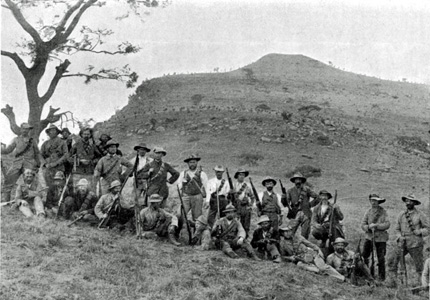
Boer Militia
Other Official Medals
Queen's Mediterranean (QMM)
Three other British medals associated with the campaign in Africa are the (1) Queen's Mediterranean Medal; (2) the Transport Medal with clasp, S. AFRICA 1899 - 1902 and (3) the St. John's Ambulance Brigade Medal.
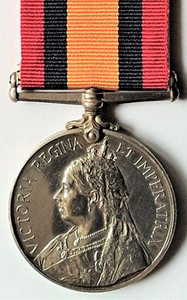
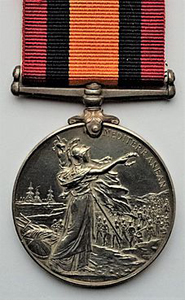
Queen's Mediterranean Medal
The Queen's Mediterranean Medal was authorized by King Edward VII and was awarded to Militia troops, who had replaced their regular Army counterparts in the various military garrisons across the Mediterranean. This allowed regular troops to become available for the Second Boer War. Troops on the island of St. Helena, who were guarding Boer prisoners of war in the POW camp, were awarded the Queen's South Africa Medal without bar. The design is identical to the Queen's South Africa Medal, except the word AFRICA on the reverse is replaced by the word MEDITERRANEAN. There were no clasps authorized. Approximately 4,951 medals were awarded.
Awards By Unit
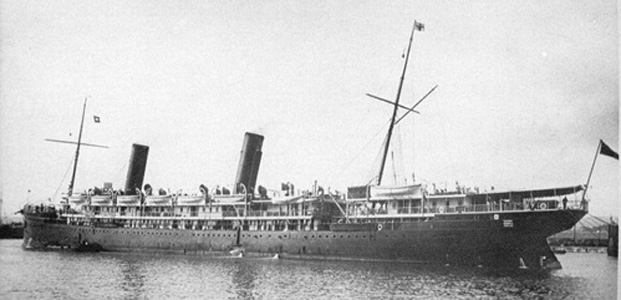
HMS Ophir
Transport Medal (TM)
The Transport Medal was a British campaign medal sanctioned on November 8, 1903 and awarded by the Lord Commissioners of the Admiralty. It was awarded to masters and officers[2] of merchant ships employed by the Transport Service to move troops to either South Africa during the South African War or to China during the Boxer Rebellion. The officers of hospital ships used in the campaigns also qualified. For the Second Boer War, it was awarded with the clasp S. AFRICA 1899-1902. One other clasp, CHINA 1900 was issued for the Boxer Rebellion.
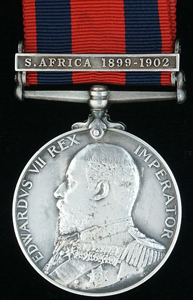

Transport Medal with S. AFRICA 1899-1902 Clasp
The obverse of the medal bears the effigy of King Edward VII in Royal Navy uniform, with the curved inscription EDWARDVS VII REX IMPERATOR. The reverse depicts HMS Ophir beneath a map of the world with the curved inscription in Latin OB PATRIAM MILITIBUS PER MARE TRANSVECTIS ADJUTAM (for services rendered in transporting troops by sea). Approximately 1,822 medals were issued (less than 200 with two clasps).
St. John Ambulance Brigade Medal
The St. John Ambulance Brigade men who served in South Africa were awarded a bronze medal, which bore the uncrowned head of Edward VII. Their service numbers, ranks, initials, names and units were engraved on the rim in large block letters. They also qualified for the Queen's South Africa Medal with details impressed on the rim and the unit shown as St John Ambulance Brigade. Both medals were awarded posthumously. The medal was sanctioned for wearing in uniform on January 26, 1904. Approximately 1,871 medals were issued. Of these, some 20 were issued to notable people and 40 were issued to those involved in training in the UK. As these 60 people did not leave the UK, they were not eligible to receive the QSA.
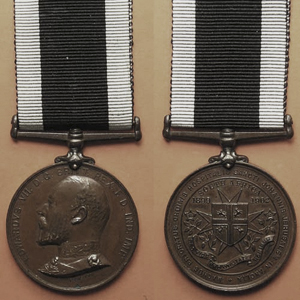
St. John Ambulance Brigade Medal
Unofficial Medals
Kimberley Star
This was an unofficial medal awarded by the mayor and town council to the defenders of Kimberley against the Boer Forces. It is not an official award and cannot be worn on the uniform with official campaign medals. Approximately 5,000 stars were awarded. The silver medal is in the shape of a six-pointed star with finial balls at the end of each point and a raised circular centre with the Kimberley town shield. A circular inscription KIMBERLEY 1899-1900 is curved around the shield. The reverse is flat and is inscribed on three lines with MAYOR'S SIEGE MEDAL 1900. The ornate suspender is sewn directly to the ribbon and attached to the star by a small metal ring. The top edge of the ribbon has a silver clasp.
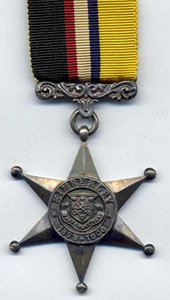
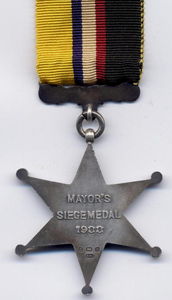
The Kimberley Star
Kimberley Medal
The mayor and council of Kimberley created the Kimberley Medal. It was struck in England but, due to the fact that it incorporated an unsanctioned Royal Cipher on the reverse, most of the medals were melted down. No medals were issued and it is unclear how many medals survived.
The obverse shows a figure of Victory above the Kimberley Town Hall, the dates 1899-1900 and the words SOUTH AFRICA. The reverse has the inscription in two shields INVESTED 15 OCT 1899 and RELIEVED 15 FEB 1900. There is an Imperial Crown, Royal Cipher and the words TO THE GALLANT DEFENDERS OF KIMBERLEY.
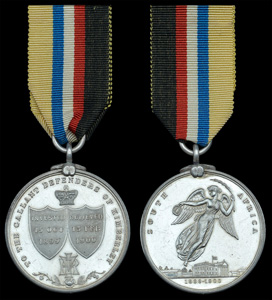
The Kimberley Medal
Cape Copper Company Medal for the Defense of O'okiep
The Cape Copper Company had its origin in the Cape Copper Mining Company that was established in 1862 or 1863 as the Cape of Good Hope Copper Mining Company to take over the copper mining properties of Phillips & King, an enterprise that had been involved in copper mining around O'okiep in Namaqualand since the 1850s. The Cape Copper Mining Company was restructured as the Cape Copper Company in 1888.
The O'okiep Garrison, commanded by Lieutenant Colonel W.A.D. Shelton DSO, consisted of some 900 men and included local miners who assisted Shelton’s troops. The civilian defenders were mostly employees of the Cape Copper Company and many were natives. After the war ended, the British government awarded the Queen's South Africa Medal to all those regular troops that had seen active service in Namaqualand during the war. When it became known that the native members of the O'okiep Garrison were excluded from receiving the QSA medal, the Cape Copper Company decided to strike a medal of its own and to present it to the defenders of the town, regardless of race.
Two versions of the unofficial Cape Copper Company Medal for the Defense of O'okiep were awarded by the Cape Copper Company Limited to members of the O'okiep Garrison, who defended the town while it was besieged by Boer Commandos from April 4 to May 4, 1902. The bulk of the private campaign medals were struck in bronze (537) and were awarded to the rank and file of the military and civilian defenders of the town, most of whom were mine workers who had taken part in the defense of O'okiep. Eighteen silver medals were awarded to officers, higher ranking mine officials and at least one non-commissioned officer, Paymaster Sergeant Harry Rodda, who was also the paymaster of the O’okiep Copper Company.
The Cape Copper Company Medal measures 36.5mm in diameter with a raised rim. The obverse depicts the encircled company emblem, a miner with a spade standing next to a mining cocopan (a small wagon running on a narrow gauge railway line), and inscribed 1888 at the bottom and THE CAPE COPPER COMPANY LIMITED around the perimeter. The reverse is smooth with a raised rim and is inscribed PRESENTED TO THE OFFICERS NON-COMMISSIONED OFFICERS AND MEN OF THE GARRISON OF OOKIEP IN RECOGNITION OF THEIR GALLANT DEFENCE OF THE TOWN UNDER LT. COL. SHELTON. D.S.O. AGAINST A GREATLY SUPERIOR FORCE OF BOERS APRIL 4TH TO MAY 4TH 1902.
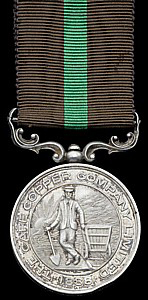
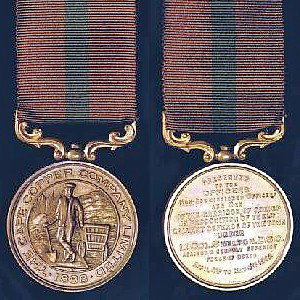
Cape Copper Company Medal for the Defense of O'okiep Silver & Bronze Medals
Queen's South Africa Medal (QSA)
The 38mm, silver Queen's South Africa Medal was awarded to all British forces who served in South Africa from October 11, 1899 up to the end of the war on May 31, 1902. Units from the British Army, Royal Navy, Colonial Forces from Australia, Canada, New Zealand, India, the Cape of Good Hope, the Colony of Natal and "Hensoppers" (joiners and collaborators, literally hands-uppers or volunteers) from the South African Republic and Orange Free State, civilians employed in official capacity, war correspondents, and non-enlisted men of whatever nationality who drew military pay, qualified for the award of the medal. Approximately 178,000 were awarded. This included those such as the New Zealand 10th Contingent, who arrived in Durban in May 1902, but did not fight. Bronze versions were awarded to some Indian troops and non-enlisted men of whatever nationality, who drew military pay.
The obverse depicts a crowned and veiled effigy of Queen Victoria, facing left, with the inscription, VICTORIA REGINA ET IMPERATRIX around the upper portion. The reverse shows Britannia holding the Union Flag in her left hand and a laurel wreath in her right hand. In the right background are troops marching inland from the coast. In the left background are two men-of-war, with Neptune's Trident and Britannia's shield on the ground in the foreground. Around the upper portion is the inscription, words SOUTH AFRICA. Three versions of the medal's reverse are known to exist. Since the war was initially expected to be of short duration and to reach its conclusion in 1900, the first medals (Type 1) were struck with the years 1899 and 1900 in the right upper quadrant of the reverse and with Britannia's wreath pointing towards the R in AFRICA. Approximately fifty of the Type 1 medals were awarded to Lord Strathcona's Horse (Royal Canadians) before it became evident that the war was going to drag on much longer. The rest of the dated medals (Type 2), which had already been minted, had the dates machined off (some still visible) and are known as Ghost Medals. The Type 2 reverse is otherwise identical to Type 1. The third version (Type 3) was minted with new dies without the years and with Britannia's wreath now almost touching the F of AFRICA.
Queen's South Africa Medal Obverse & Reverse Type 3
Bronze Type 1 Reverse with Dates and Wreath Near the R in AFRICA and Silver Type 2 Reverse with Visible Ghost Dates
Altogether, twenty-six clasps were awarded to recipients of the Queen's South Africa Medal, to indicate each action and campaign of the Second Boer War. They were authorized in Army Order 94, April 1902, as amended. The official order of wear of all 26 clasps is according to the starting dates of the applicable battle or campaign and, in the case of the four clasps with the same starting dates, also according to the duration of the campaign. As they would appear on a ribbon and read from the suspender upwards, their order of wear is as follows, with the clasps at the bottom of the list appearing closest to the suspender. They are shown with British spellings and their applicable starting dates in brackets.
- SOUTH AFRICA 1902 (January 1, 1902)
- SOUTH AFRICA 1901 (January 1, 1901)
- BELFAST (August 26, 1900)
- WITTEBERGEN (July 11, 1900)
- DIAMOND HILL (June 11, 1900)
- LAING'S NEK (June 2, 1900)
- JOHANNESBURG (May 29, 1900)
- TRANSVAAL (May 24, 1900)
- WEPENER (April 9, 1900)
- DRIEFONTEIN (March 10, 1900)
- ORANGE FREE STATE (February 28, 1900)
- PAARDEBERG (February 17, 1900)
- RELIEF OF KIMBERLEY (February 15, 1900)
- TUGELA HEIGHTS (February 14, 1900)
- RELIEF OF LADYSMITH (December 15, 1899)
- MODDER RIVER (November 28, 1899)
- BELMONT (November 23, 1899)
- DEFENCE OF LADYSMITH (November 3, 1899)
- ELANDSLAAGTE (October 21, 1899)
- TALANA (October 20, 1899)
- DEFENCE OF KIMBERLEY (October 14, 1899)
- DEFENCE OF KIMBERLEY (October 14, 1899)
- RELIEF OF MAFEKING (October 11, 1899 to May 17, 1900)
- RHODESIA (October 11, 1899 to May 17, 1900)
- NATAL (October 11, 1899 to June 11, 1900)
- CAPE COLONY (October 11, 1899 to May 31, 1902)
Unoffical Clasps:
- COLENSO
- GLENCOE
- ORANGE RIVER COLONY
- PIETER'S HILL
- ZAND RIVER
State Clasps:
A State clasp was awarded for service within that state, when no Battle clasp was awarded to the recipient for a specific action within the same state. A Queen's South Africa Medal could therefore not carry both a State clasp and a Battle clasp for actions within the same state. The same rule applied to the RHODESIA Clasp, which was not awarded along with the RELIEF OF MAFEKING Clasp. The CAPE COLONY and NATAL Clasps were not awarded together, with the exception of Private Wingell, a Royal Marine attached to the Army.
The CAPE COLONY Clasp was awarded to all troops in the Cape of Good Hope at any time between October 11, 1899 and May 31, 1902 inclusive, who had not received a clasp for a specific action in the Cape of Good Hope, or the NATAL Clasp. The NATAL Clasp was awarded to all troops in the Colony of Natal at any time between October 11, 1899 and June 11, 1900 inclusive, who had not received a clasp for a specific action in Natal or the Cape of Good Hope. The ORANGE FREE STATE Clasp was awarded to all troops in the Orange Free State at any time between February 28, 1900 and May 31, 1902 inclusive, who had not received a clasp for a specific action in the Orange Free State. The RHODESIA Clasp was awarded to all troops who were under the command of Lieutenant General Sir F. Carrington and Colonel Plumer in Rhodesia between October 11, 1899 and May 17, 1900 inclusive, or who landed at Beira, Mozambique, between October 11, 1899 and May 25, 1900 inclusive. The TRANSVAAL Clasp was awarded to all troops in the South African Republic at any time between May 24, 1900 and May 31, 1902 inclusive, who had not received a clasp for a specific action in the South African Republic.
Date Clasps:
The two date clasps are normally worn with the King's South Africa Medal, but are worn with the Queen's South Africa Medal when the recipient was ineligible for the award of the King's South Africa Medal, but had qualified for one or both of the clasps, independently. The SOUTH AFRICA 1901 Clasp was awarded to all troops who served in South Africa between January 1, 1901 and December 31, 1901 inclusive, who were not eligible for the King's South Africa Medal. The SOUTH AFRICA 1902 Clasp was awarded to all troops who served in South Africa between January 1, 1902 and May 31, 1902 inclusive, who were not eligible for the King's South Africa Medal.
Battle Clasps:
Recipients could not be awarded both the DEFENCE OF and RELIEF OF Clasps for Mafeking, Kimberley or Ladysmith. The BELFAST Clasp was awarded to all troops who, on August 26 or 27, 1900, were east of a north-south line drawn through Wonderfontein, the garrison and troops quartered at Wonderfontein excluded, west of a north-south line drawn through Dalmanutha Station and north of an east-west line drawn through Carolina in the South African Republic. The BELMONT Clasp was awarded to all troops under Lieutenant General Lord Methuen's command who were north of Witteputs, Cape of Good Hope on November 23, 1899. The DEFENSE OF KIMBERLEY Clasp was awarded to all troops in the garrison of Kimberley, Cape of Good Hope between October 14, 1899 and February 15, 1900 inclusive. The DEFENSE OF LADYSMITH Clasp was awarded to all troops in Ladysmith, Natal, between November 3, 1899 and February 28, 1900, inclusive. The DEFENSE OF MAFEKING Clasp was awarded to all troops in the garrison of Mafeking, Cape of Good Hope, between October 13, 1899 and May 17, 1900, inclusive. The DIAMOND HILL Clasp was awarded to all troops who, on June 11 and 12. 1900, were east of a north-south line drawn through Silverton Siding and north of an east-west line drawn through Vlakfontein in the South African Republic.
The DRIEFONTEIN Clasp was awarded to all troops with Army Headquarters, and Lieutenant General John French's column which advanced from Poplar Grove in the Orange Free State on March 10, 1900. The ELANDSLAAGTE Clasp was awarded to all troops at Elandslaagte, Natal, on October 21, 1899, who were on the right bank of the Sunday River in Natal and north of an east-west line drawn through Buys Farm. The JOHANNESBURG Clasp was awarded to all troops who, on May 29, 1900, were north of an east-west line drawn through Klip River Station (exclusive) and east of a north-south line drawn through Krugersdorp Station (inclusive) in the South African Republic. The LAING'S NEK Clasp was awarded to all troops of the Natal Field Force employed in the operations at Laing's Nek Pass, north of an east-west line drawn through Newcastle, Natal, between June 2 and 9, 1900 inclusive. The MODDER RIVER Clasp was awarded to all troops under Lieutenant General Lord Methuen's command who were north of Heuningneskloof, Cape of Good Hope (exclusive), and south of the Magersfontein ridge (exclusive) on November 28, 1899. The PAARDEBERG Clasp was awarded to all troops within 7,000 yards of General Piet Cronje's final laager in the Orange Free State between midnight of February 17, 1900 and midnight of February 26, 1900, and to all troops within 7,000 yards of Kudusrand Drift between the same dates.
The RELIEF OF KIMBERLEY Clasp was awarded to all troops in the relief column under Lieutenant General French who marched from Klipdrift on February 15, 1900, and all the 6th Division troops under Lieutenant General Thomas Kelly-Kenny who were within 7,000 yards of Klipdrift on February 15, 1900. The RELIEF OF LADYSMITH Clasp was awarded to all troops in Natal north of and including Estcourt between December 15, 1899 and February 28, 1900 inclusive. The RELIEF OF MAFEKING Clasp was awarded to all troops under the command of Colonel Bryan Mahon who marched from Barkly West, Cape of Good Hope, on May 4, 1900, and to all troops under the command of Colonel Herbert Plumer between October 11, 1899 and May 17, 1900 inclusive, who were south of an east-west line drawn through Palachwe in Bechuanaland Protectorate.
The TALANA Clasp was awarded to all troops under Major General Sir William Penn Symons' command on October 20, 1899 who were north of an east-west line drawn through the railway station at Waschbank, Natal. The TUGELA HEIGHTS Clasp was awarded to all troops of the Natal Field Force, exclusive of the Ladysmith garrison, employed in the operations north of an east-west line drawn through Chieveley Station between February 14 and 27, 1900 inclusive. The WEPENER Clasp was awarded to all troops engaged in the defense of Wepener, Orange Free State, between April 9, 1900 and April 25, 1900 inclusive. The WITTEBERGEN Clasp was awarded to all troops who were inside a line drawn from Harrismith to Bethlehem, thence to Senekal and Clocolan in the Orange Free State along the Basutoland border, and back to Harrismith, between July 1 and 29, 1900 inclusive.
King's South Africa Medal (QSA)
The King's South Africa Medal is a British campaign medal which was awarded to all British and Colonial military personnel who served in the Second Boer War in South Africa, who were in the theatre on or after January 1, 1902. The King's South Africa Medal was awarded only to those troops who fought in 1902, and who had served in the war for a total of 18 months. Even with continuous service, the recipient would have had to have served from December 1, 1900 to have 18 months service before the war ended on May 31, 1902. Service therefore had to have commenced before the death of Queen Victoria on January 22, 1901 and, as a result, the majority of participants qualified for the award of the Queen's South Africa Medal only.
Men who were invalided out of South Africa due to wounds prior to 1 January 1902 but who returned and served any time between 1 January 1902 and 31 May 1902 were also granted the medal, provided they had completed the 18 months aggregate qualifying service.
King's South Africa Medal with Date Clasps
The second campaign medal for the Second Boer War, which could be awarded for service in South Africa, the 38mm King's South Africa Medal, was instituted in 1902 and was the first British campaign medal to be instituted by King Edward VII.
The obverse depicts King Edward VII in a Field Marshal's uniform and facing left, with the curved inscription, EDWARDVS VII REX IMPERATOR around the upper portion. The reverse shows Britannia holding the Union Flag in her left hand and a laurel wreath in her right hand. In the right background are troops marching inland from the coast. In the left background are two men-of-war, with Neptune's Trident and Britannia's shield on the ground in the foreground. Around the top portion is the inscription SOUTH AFRICA. The reverse is identical to the third version reverse of the Queen's South Africa Medal, with the wreath almost touching the F of AFRICA.
Date Clasps:
Two date clasps were awarded for service in 1901 and 1902, but nurses did not qualify to receive either clasp. Apart from the nearly 600 nursing sisters who were awarded the King's South Africa Medal without a clasp, the medal was always awarded with at least one clasp and in most cases with both. With the exception of, for example, wounded men who returned to action in 1902 after having been out of action for the whole of 1901 and who could therefore possibly receive the medal with only the 1902 clasp, the rest of the recipients were awarded the medal with both clasps.
The date clasps are normally worn with the King's South Africa Medal, but are also worn with the Queen's South Africa Medal by those recipients who had qualified for one or both of the clasps, but who were ineligible for the award of the King's Medal. The two clasps are:
SOUTH AFRICA 1901 - awarded to all troops who served in South Africa between January 1, 1901 and December 31, 1901 inclusive
SOUTH AFRICA 1902 - awarded to all troops who served in South Africa between January 1, 1902 and May 31, 1902 inclusive.
Boer Militia
Other Official Medals
Queen's Mediterranean (QMM)
Three other British medals associated with the campaign in Africa are the (1) Queen's Mediterranean Medal; (2) the Transport Medal with clasp, S. AFRICA 1899 - 1902 and (3) the St. John's Ambulance Brigade Medal.
Queen's Mediterranean Medal
The Queen's Mediterranean Medal was authorized by King Edward VII and was awarded to Militia troops, who had replaced their regular Army counterparts in the various military garrisons across the Mediterranean. This allowed regular troops to become available for the Second Boer War. Troops on the island of St. Helena, who were guarding Boer prisoners of war in the POW camp, were awarded the Queen's South Africa Medal without bar. The design is identical to the Queen's South Africa Medal, except the word AFRICA on the reverse is replaced by the word MEDITERRANEAN. There were no clasps authorized. Approximately 4,951 medals were awarded.
Awards By Unit
- Royal Northumberland Fusiliers (579)
- West Yorkshire Regiment (855)
- Loyal North Lancashire Regiment (231)
- Loyal North Lancashire Regiment (231)
- King's Own Yorkshire Light Infantry (768)
- Seaforth Highlanders (817)
- Royal Munster Fusiliers (548)
HMS Ophir
Transport Medal (TM)
The Transport Medal was a British campaign medal sanctioned on November 8, 1903 and awarded by the Lord Commissioners of the Admiralty. It was awarded to masters and officers[2] of merchant ships employed by the Transport Service to move troops to either South Africa during the South African War or to China during the Boxer Rebellion. The officers of hospital ships used in the campaigns also qualified. For the Second Boer War, it was awarded with the clasp S. AFRICA 1899-1902. One other clasp, CHINA 1900 was issued for the Boxer Rebellion.
Transport Medal with S. AFRICA 1899-1902 Clasp
The obverse of the medal bears the effigy of King Edward VII in Royal Navy uniform, with the curved inscription EDWARDVS VII REX IMPERATOR. The reverse depicts HMS Ophir beneath a map of the world with the curved inscription in Latin OB PATRIAM MILITIBUS PER MARE TRANSVECTIS ADJUTAM (for services rendered in transporting troops by sea). Approximately 1,822 medals were issued (less than 200 with two clasps).
St. John Ambulance Brigade Medal
The St. John Ambulance Brigade men who served in South Africa were awarded a bronze medal, which bore the uncrowned head of Edward VII. Their service numbers, ranks, initials, names and units were engraved on the rim in large block letters. They also qualified for the Queen's South Africa Medal with details impressed on the rim and the unit shown as St John Ambulance Brigade. Both medals were awarded posthumously. The medal was sanctioned for wearing in uniform on January 26, 1904. Approximately 1,871 medals were issued. Of these, some 20 were issued to notable people and 40 were issued to those involved in training in the UK. As these 60 people did not leave the UK, they were not eligible to receive the QSA.
St. John Ambulance Brigade Medal
Unofficial Medals
Kimberley Star
This was an unofficial medal awarded by the mayor and town council to the defenders of Kimberley against the Boer Forces. It is not an official award and cannot be worn on the uniform with official campaign medals. Approximately 5,000 stars were awarded. The silver medal is in the shape of a six-pointed star with finial balls at the end of each point and a raised circular centre with the Kimberley town shield. A circular inscription KIMBERLEY 1899-1900 is curved around the shield. The reverse is flat and is inscribed on three lines with MAYOR'S SIEGE MEDAL 1900. The ornate suspender is sewn directly to the ribbon and attached to the star by a small metal ring. The top edge of the ribbon has a silver clasp.
The Kimberley Star
Kimberley Medal
The mayor and council of Kimberley created the Kimberley Medal. It was struck in England but, due to the fact that it incorporated an unsanctioned Royal Cipher on the reverse, most of the medals were melted down. No medals were issued and it is unclear how many medals survived.
The obverse shows a figure of Victory above the Kimberley Town Hall, the dates 1899-1900 and the words SOUTH AFRICA. The reverse has the inscription in two shields INVESTED 15 OCT 1899 and RELIEVED 15 FEB 1900. There is an Imperial Crown, Royal Cipher and the words TO THE GALLANT DEFENDERS OF KIMBERLEY.
The Kimberley Medal
Cape Copper Company Medal for the Defense of O'okiep
The Cape Copper Company had its origin in the Cape Copper Mining Company that was established in 1862 or 1863 as the Cape of Good Hope Copper Mining Company to take over the copper mining properties of Phillips & King, an enterprise that had been involved in copper mining around O'okiep in Namaqualand since the 1850s. The Cape Copper Mining Company was restructured as the Cape Copper Company in 1888.
The O'okiep Garrison, commanded by Lieutenant Colonel W.A.D. Shelton DSO, consisted of some 900 men and included local miners who assisted Shelton’s troops. The civilian defenders were mostly employees of the Cape Copper Company and many were natives. After the war ended, the British government awarded the Queen's South Africa Medal to all those regular troops that had seen active service in Namaqualand during the war. When it became known that the native members of the O'okiep Garrison were excluded from receiving the QSA medal, the Cape Copper Company decided to strike a medal of its own and to present it to the defenders of the town, regardless of race.
Two versions of the unofficial Cape Copper Company Medal for the Defense of O'okiep were awarded by the Cape Copper Company Limited to members of the O'okiep Garrison, who defended the town while it was besieged by Boer Commandos from April 4 to May 4, 1902. The bulk of the private campaign medals were struck in bronze (537) and were awarded to the rank and file of the military and civilian defenders of the town, most of whom were mine workers who had taken part in the defense of O'okiep. Eighteen silver medals were awarded to officers, higher ranking mine officials and at least one non-commissioned officer, Paymaster Sergeant Harry Rodda, who was also the paymaster of the O’okiep Copper Company.
The Cape Copper Company Medal measures 36.5mm in diameter with a raised rim. The obverse depicts the encircled company emblem, a miner with a spade standing next to a mining cocopan (a small wagon running on a narrow gauge railway line), and inscribed 1888 at the bottom and THE CAPE COPPER COMPANY LIMITED around the perimeter. The reverse is smooth with a raised rim and is inscribed PRESENTED TO THE OFFICERS NON-COMMISSIONED OFFICERS AND MEN OF THE GARRISON OF OOKIEP IN RECOGNITION OF THEIR GALLANT DEFENCE OF THE TOWN UNDER LT. COL. SHELTON. D.S.O. AGAINST A GREATLY SUPERIOR FORCE OF BOERS APRIL 4TH TO MAY 4TH 1902.
Cape Copper Company Medal for the Defense of O'okiep Silver & Bronze Medals
Website Maintained by Vaudezilla