American Red Cross (ARC)
The American Red Cross, founded in 1881, was the first to join the war effort in Europe. In 1914 with the outbreak of the hostilities. The initial Red Cross effort was the launch a hospital ship for the relief of European casualties. The ship, known as the SS Red Cross* often referred to as the Mercy Ship, had a single red stripe along the hull marking it as a neutral entity. It sailed for England the first-time during September 1914. Once in England, it distributed supplies, such as medical gauze, anesthetics, clothing, and camp supplies throughout England, France, Russia, and Germany. The ship was staffed by 18 crew members (mostly retired U.S. Navy), 30 surgeons and 125 nurses. Helen Scott Hay (Florence Nightingale Medal recipient), graduate of Northwestern University and the Illinois Training School for Nurses was In-charge of the Red Cross nursing component.
* - The SS Red Cross was formerly the German passenger steamer Hamburg
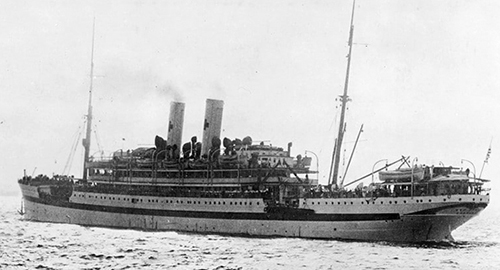
SS Red Cross circa 1914
Another famous WW I American nurse and member of the SS Red Cross initial expedition was Katrina Elisabeth Herzer (Florence Nightingale Medal). In 1916 following her experience with the Red Cross in Europe, she was named Chief Nurse of the United States Navy Nurse Corps during World War I. Stationed at American Red Cross Headquarters in Washington D.C., she served as the Navy Nurse Corps recruiting liaison for Janet Delano.
Overseas the Red Cross medical personnel worked in teams of three surgeons and 12 nurses each. One or more teams offered emergency aid to each of the countries involved in the war. With later personnel additions, 16 teams were providing neutral relief to the nations at war. In all, 350 surgeons and nurses participated in the early Red Cross efforts. The Red Cross insisted on neutrality on the part of their medical workers in Europe and required treatment of casualties from all sides. During October 1915, funding constraints and a blockade of Germany which would not allow medical supplies to pass through, forced the Red Cross to end relief efforts. Teams were withdrawn from Europe, but many of the doctors and nurses who were part of the original Mercy Ship missions remained. They volunteered by assisting and cooperating with other organizations offering war relief.
The early 1914 expedition became an important steppingstone in the organization's evolution. At the beginning of the war, the American Red Cross was a small organization still in the process of developing its identity and programs. The programs were largely domestic. The organization launched many more campaigns after President Woodrow Wilson declared war in 1917. By the time the war ended in November 1918, the American Red Cross had become a major national humanitarian organization with strong leadership, a global mission, a huge membership base and a broad and distinguished record of service. It had also opened international careers for American nurses that would have been unattainable prior to the war.
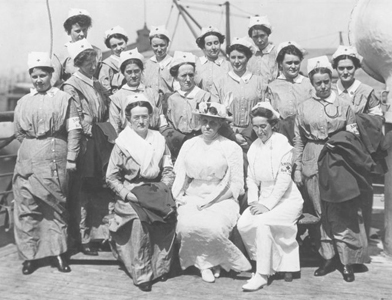
Jane Delano, Founder of the Red Cross Nursing Service (center), Helen Scott Hay (on her right in all white) and Red Cross Nurses Onboard SS Red Cross
Beginning in 1914, Red Cross nurses were deployed to France and England. When America entered the war in 1917, seventeen base hospital units, each staffed by 65 Red Cross nurses, were established in France.
The Red Cross Nursing Service was established in1909. Already an important branch of the Red Cross before the war, the Nursing Service greatly expanded with the outbreak of hostilities. Its principal task became providing trained nurses for the U.S. Army and Navy. The military services enrolled 23,822 Red Cross nurses during the war. Of these, 19,931 were assigned to active duty with the Army, Navy, U.S. Public Health Service, and Red Cross overseas operations. The Red Cross also enrolled and trained nurses' aides to compensate for the shortage of nurses on the home front. Many Red Cross nurses and nurses' aides would also be enlisted in the battle against the influenza pandemic of 1918.** In addition to nursing and hospital services, the ARC was also involved in: (1) the home front production of garments, surgical dressings and other medical supplies, comfort kits, and additional items for the benefit of American and Allied soldiers and sailors; (2) Overseas Camp and Canteen Services; (3) Overseas Recreation Services; (4) domestic Transportation Services and (5) Ambulance Services.*** Red Cross wartime efforts cost the lives of 400 workers (70 males and 330 females) between 1914 and 1921, including 296 nurses.
** - The 1918 influenza pandemic was the most severe pandemic in recent history. It was caused by an H1N1 virus with genes of avian origin. it spread worldwide during 1918-1919.
*** - 127 American Red Cross ambulance drivers died in service to humanity during the war.
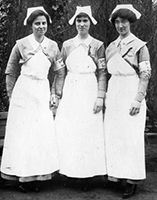
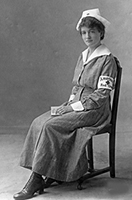
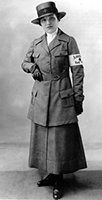
WWI Red Cross Working and Dress Uniforms
The World War I American Red Cross Foreign Service Award reads, SERVICE AMERICAN RED CROSS with a red (Geneva) cross at its center. The top bar reads, FOREIGN SERVICE. The reverse is blank.
The extremely rare World War I American Red Cross Automotive and Mechanic Section Medal was awarded to ambulance drivers and chauffeurs. The obverse reads, A.R.C. A. & M. S. and the bottom reads, WORLD'S WAR. The reverse depicts a patient on a stretcher being placed in an ambulance.
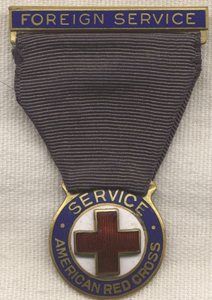
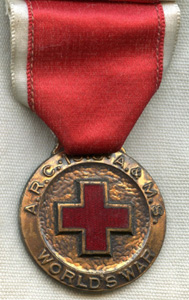
RC Foreign Service Award and Automotive and Mechanic Section Medal
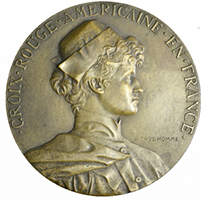
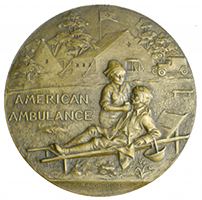
Red Cross in France Commemorative
The obverse of the American Red Cross in France Commemorative (1920) by Geroges Prudhomme depicts a Red Cross nurse facing right. It is inscribed CROIX ROUGE AMERICAINE EN FRANCE. The reverse depicts a nurse aiding a wounded patient on a cot in front of a field hospital complex. The two-line inscription reads, AMERICAN AMBULANCE, a term for an aid or clearing station.
The American Red Cross, founded in 1881, was the first to join the war effort in Europe. In 1914 with the outbreak of the hostilities. The initial Red Cross effort was the launch a hospital ship for the relief of European casualties. The ship, known as the SS Red Cross* often referred to as the Mercy Ship, had a single red stripe along the hull marking it as a neutral entity. It sailed for England the first-time during September 1914. Once in England, it distributed supplies, such as medical gauze, anesthetics, clothing, and camp supplies throughout England, France, Russia, and Germany. The ship was staffed by 18 crew members (mostly retired U.S. Navy), 30 surgeons and 125 nurses. Helen Scott Hay (Florence Nightingale Medal recipient), graduate of Northwestern University and the Illinois Training School for Nurses was In-charge of the Red Cross nursing component.
* - The SS Red Cross was formerly the German passenger steamer Hamburg
SS Red Cross circa 1914
Overseas the Red Cross medical personnel worked in teams of three surgeons and 12 nurses each. One or more teams offered emergency aid to each of the countries involved in the war. With later personnel additions, 16 teams were providing neutral relief to the nations at war. In all, 350 surgeons and nurses participated in the early Red Cross efforts. The Red Cross insisted on neutrality on the part of their medical workers in Europe and required treatment of casualties from all sides. During October 1915, funding constraints and a blockade of Germany which would not allow medical supplies to pass through, forced the Red Cross to end relief efforts. Teams were withdrawn from Europe, but many of the doctors and nurses who were part of the original Mercy Ship missions remained. They volunteered by assisting and cooperating with other organizations offering war relief.
The early 1914 expedition became an important steppingstone in the organization's evolution. At the beginning of the war, the American Red Cross was a small organization still in the process of developing its identity and programs. The programs were largely domestic. The organization launched many more campaigns after President Woodrow Wilson declared war in 1917. By the time the war ended in November 1918, the American Red Cross had become a major national humanitarian organization with strong leadership, a global mission, a huge membership base and a broad and distinguished record of service. It had also opened international careers for American nurses that would have been unattainable prior to the war.
Jane Delano, Founder of the Red Cross Nursing Service (center), Helen Scott Hay (on her right in all white) and Red Cross Nurses Onboard SS Red Cross
The Red Cross Nursing Service was established in1909. Already an important branch of the Red Cross before the war, the Nursing Service greatly expanded with the outbreak of hostilities. Its principal task became providing trained nurses for the U.S. Army and Navy. The military services enrolled 23,822 Red Cross nurses during the war. Of these, 19,931 were assigned to active duty with the Army, Navy, U.S. Public Health Service, and Red Cross overseas operations. The Red Cross also enrolled and trained nurses' aides to compensate for the shortage of nurses on the home front. Many Red Cross nurses and nurses' aides would also be enlisted in the battle against the influenza pandemic of 1918.** In addition to nursing and hospital services, the ARC was also involved in: (1) the home front production of garments, surgical dressings and other medical supplies, comfort kits, and additional items for the benefit of American and Allied soldiers and sailors; (2) Overseas Camp and Canteen Services; (3) Overseas Recreation Services; (4) domestic Transportation Services and (5) Ambulance Services.*** Red Cross wartime efforts cost the lives of 400 workers (70 males and 330 females) between 1914 and 1921, including 296 nurses.
** - The 1918 influenza pandemic was the most severe pandemic in recent history. It was caused by an H1N1 virus with genes of avian origin. it spread worldwide during 1918-1919.
*** - 127 American Red Cross ambulance drivers died in service to humanity during the war.
WWI Red Cross Working and Dress Uniforms
The extremely rare World War I American Red Cross Automotive and Mechanic Section Medal was awarded to ambulance drivers and chauffeurs. The obverse reads, A.R.C. A. & M. S. and the bottom reads, WORLD'S WAR. The reverse depicts a patient on a stretcher being placed in an ambulance.
RC Foreign Service Award and Automotive and Mechanic Section Medal
Red Cross in France Commemorative
Website Maintained by Vaudezilla